
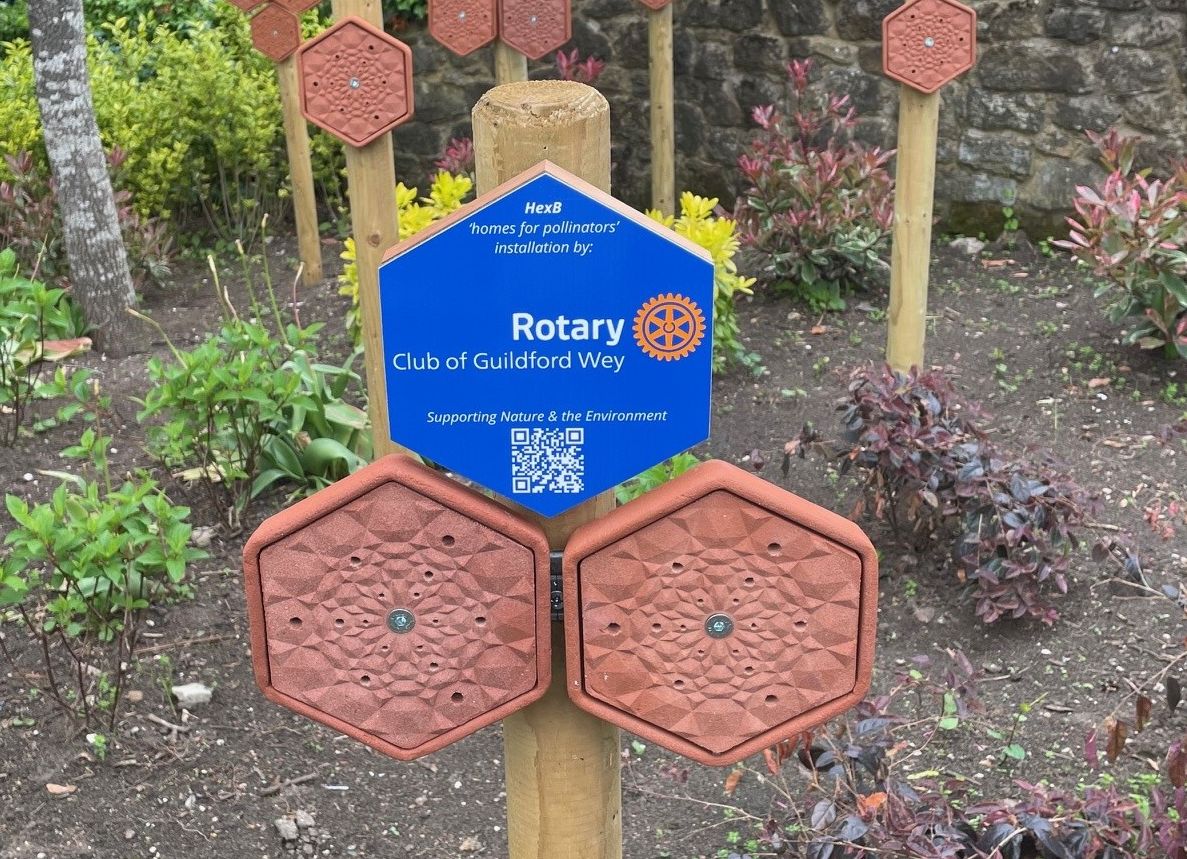
Lewes Artist and sculptor Will Nash is redefining the relationship between art and ecology with his project, HexB Tiles. Elegant terracotta sculptures that double as homes for beneficial insects. Designed to encourage biodiversity in both urban and rural spaces, HexB Tiles blend beauty, function and environmental purpose.
The Rotary Club of Guildford Wey Has bought and placed these HexB tiles in the wonderful Castle grounds to compliment the wonderful work that the Guildford Borough Council Parks & Gardens team achieve.
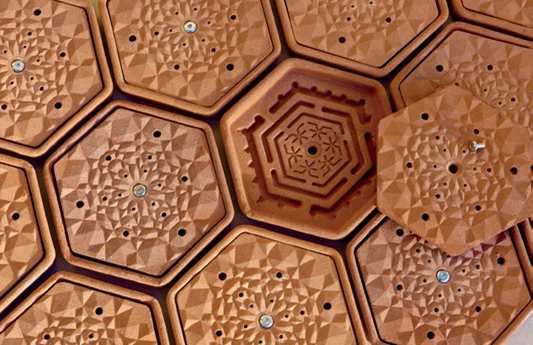
Small in size but big in impact, each HexB Tile features a network of internal cavities where pollinators and other invertebrates can nest. The tiles can be installed individually or combined in decorative honeycomb arrangements on walls, fences or posts transforming functional insect habitats into striking garden features.
Designing for Bees
The concept for HexB grew from Nash’s fascination with habitable sculpture; art that offers both aesthetic and ecological value. Created by combining modern and traditional methods, using 3D printing and clay press moulding, Nash developed the tiles as modular, sculptural habitats that integrate seamlessly into human spaces.
In Spring 2025, a new generation of HexB Tiles went into production. These improved versions are being monitored at RHS Wisley and by The Buzz Club at the University of Sussex, where scientists are observing which species use them and how successful the nests are. The results will inform future designs.
Art with Ecological Purpose
Nash’s interest in “habitable sculpture” began with the Bat Bothy, a stone work designed with an internal space for roosting bats. During a visit to Warnham Nature Reserve, he noticed that what appeared to be discarded rubbish was in fact deliberately placed habitat structures supporting local wildlife. This insight prompted him to merge his sculptural practice with ecological design, creating works that function simultaneously as wildlife shelters and visually compelling artworks.
Since 2020, Nash has collaborated with wildlife experts, councils, developers, and nature reserves across the UK to design sculptures that enhance landscapes, engage communities, and promote biodiversity.
His works highlight the interconnectedness of all life, urging viewers to consider their role within the wider ecological system.
“Good design can do more than please the eye,” Nash says. “It can educate, engage and inspire — and even offer a home to the smallest inhabitants of our world.”
To see the installation in the Castle Grounds Click Here